
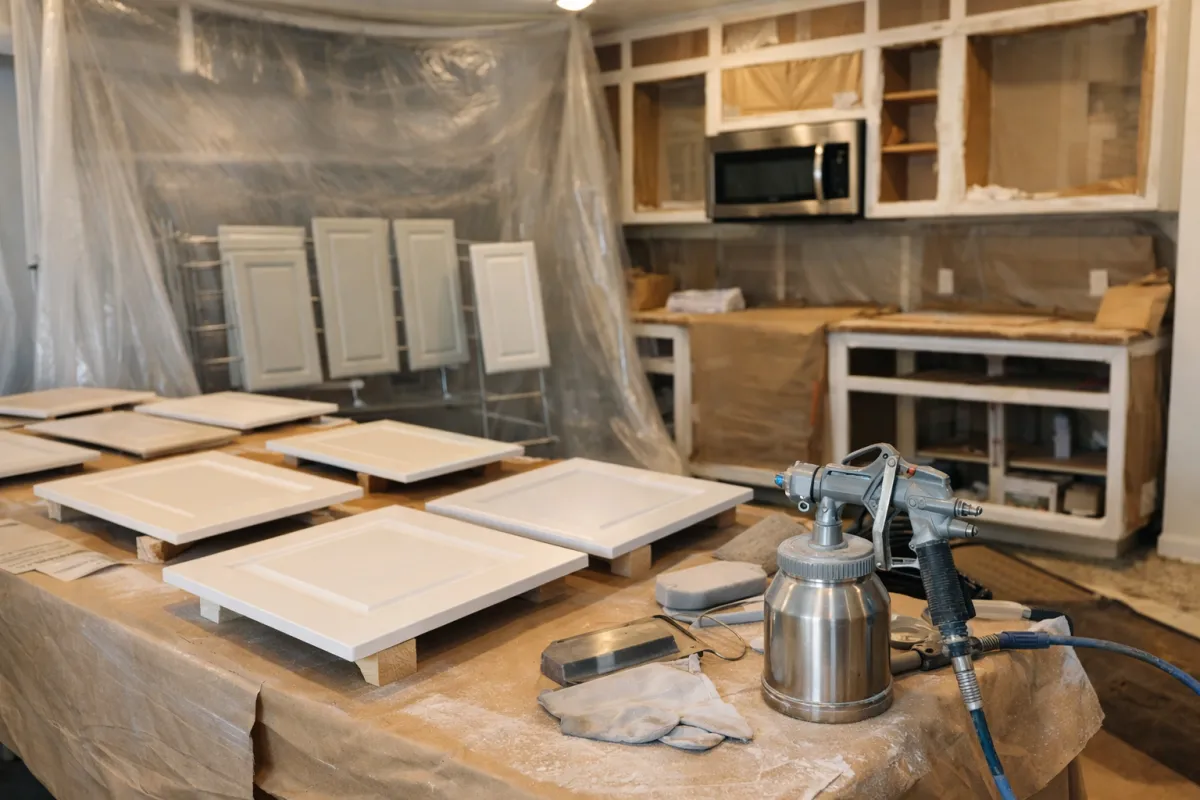
Cabinet Painting Costs in Waltham & Watertown, MA
Waltham homeowners and Watertown call us all the time with the same question:
“Why did I get one cabinet painting quote for $2,500 and another for $6,000?”
On the surface, both contractors are offering “cabinet painting.” But in reality, those prices usually reflect two very different approaches — one focused on speed, the other focused on durability.
If you live in an older New England home, especially around Waltham’s established neighborhoods or Watertown’s mid-century houses, those differences matter more than most people realize.
Where Cheap Cabinet Paint Jobs Usually Fail First
We rarely get calls right after a cabinet job is finished.
We get them 12 to 24 months later.
That’s when homeowners start noticing:
Chipping around knobs and pulls
Peeling near the stove or dishwasher
Paint wearing through on cabinet edges
Yellowing or discoloration near cooking areas
These failures don’t happen because someone used “bad paint.”
They happen because shortcuts were taken before paint ever went on.
What Older Waltham & Watertown Kitchens Demand
Many kitchens in Waltham and Watertown weren’t built with painting in mind. We’re often working with cabinets that are 20 to 40 years old, coated in factory finishes designed to repel new coatings, and layered with grease from decades of daily cooking. On top of that, seasonal humidity changes cause wood to expand and contract, which adds another challenge that has to be accounted for during prep.
What a Durable Cabinet Painting Process Actually Looks Like
Before any paint is applied, a professional process includes:
Full door and drawer removal
Every piece is taken down, labeled, and tracked so it goes back exactly where it belongs. Hardware is removed, bagged, and documented.
Degreasing and surface cleaning
Kitchen cabinets absorb oils and residue over decades. If those contaminants stay, paint failure is guaranteed.
Surface prep based on the existing finish
Some cabinets require sanding. Others need chemical deglossing. Many need both. There is no one-size-fits-all approach.
Detailed repairs and smoothing
Small dings and worn edges may not stand out now, but fresh paint and kitchen lighting make every flaw visible.
Priming and re-sanding
Primer isn’t a single step — it’s part of a system. Surfaces are lightly sanded between coats to ensure adhesion and smoothness.
👉 This preparation often accounts for 60–70% of the total project time.
That’s also where lower quotes usually cut corners.
Why Application Method Matters More Than Most Homeowners Think
Painting cabinets isn’t like painting walls.
Professional cabinet painters rely on:
HVLP or airless spray systems
Controlled spray environments or off-site setups
Finishes designed to cure hard, not just dry
In many Waltham and Watertown homes, cabinet doors are sprayed off-site because kitchens simply aren’t designed to function as paint booths.
This is how you get:
Smooth, factory-like finishes
Consistent color and texture
Long-term resistance to wear and cleaning
Brushing or rolling may look fine at first — but it rarely holds up under daily use.
Why Labor Is the Biggest Line Item
A typical kitchen cabinet project involves far more than most homeowners expect. It can require 30 to 40 or more hours of skilled labor, spread across multiple visits to allow for proper curing between coats. Every door has to be sprayed evenly, every surface checked under lighting, and any imperfection corrected immediately. One mistake doesn’t get hidden — it gets sanded down and resprayed.
When Cabinet Painting Doesn’t Make Sense
A good painter won’t recommend painting in every situation.
Cabinet painting may not be the right move if:
Cabinet boxes are structurally damaged
Thermofoil surfaces are already failing
A full remodel is planned in the near future
Honest guidance is part of what homeowners are paying for — even when it means recommending against the job.
Choosing a Cabinet Painter Without Guessing
When comparing quotes, ask:
Can you explain your prep process step by step?
What products are you using, and why?
How long is curing time between coats?
What happens if something fails later?
Clear answers matter more than low numbers.
Making the Right Call for Your Kitchen
A properly executed cabinet paint job can last 10 to 15 years with normal wear. A rushed one may need attention in two.
For many homeowners, professional cabinet painting becomes the most cost-effective way to refresh a kitchen — without the expense or disruption of replacement.
If you’re considering cabinet painting in Waltham, MA, or looking to improve the overall look of your kitchen with interior painting services, working with a process-driven professional makes all the difference.
At W&F Painting Solutions LLC, we walk homeowners through the materials, timeline, and expectations upfront — so there are no surprises once the work begins.
Cabinet Painting FAQs for Waltham & Watertown Homeowners
How long does cabinet painting last in older Waltham and Watertown homes?
In homes around Waltham and Watertown, a professionally executed cabinet paint job typically lasts 10 to 15 years when proper prep and curing are followed. Older homes often experience seasonal humidity changes, so surface preparation and the right primer matter even more here than in newer construction. Shortcuts usually show up as chipping or peeling within a few years.
Do cabinet doors need to be removed for painting?
In most cases, yes — especially in local kitchens where cabinets have years of grease buildup and older factory finishes. Removing the doors allows for thorough cleaning, proper surface prep, and smoother sprayed finishes. In many Waltham and Watertown homes, doors are painted off-site or in controlled spray setups because kitchens aren’t designed to function as paint booths.
Is cabinet painting a good option if I’m not planning a full remodel?
For homeowners who like their kitchen layout but want it to feel cleaner and more updated, cabinet painting is often the most practical option. As long as the cabinet boxes are structurally sound, painting can refresh the space without the cost, timeline, and disruption of full cabinet replacement — which is common for many established homes in this area.








Mail
Facebook
LinkedIn
X
Pinterest
Reddit