Residential Painters in Middlesex County MA

Exterior House Painting in Waltham, MA & Middlesex County
Local Exterior Painters Who Prep It Right - So It Holds Up Through New England Winters
If your paint is starting to peel around the trim, the siding looks faded on the south side of the house, or you spotted soft wood near a window frame last spring — you're dealing with what most Waltham homeowners eventually face. Massachusetts winters are hard on exterior paint. Freeze-thaw cycles lift paint off wood. Failed caulk lets moisture in. And painting over those problems without fixing them first means you'll be doing it again in two years.
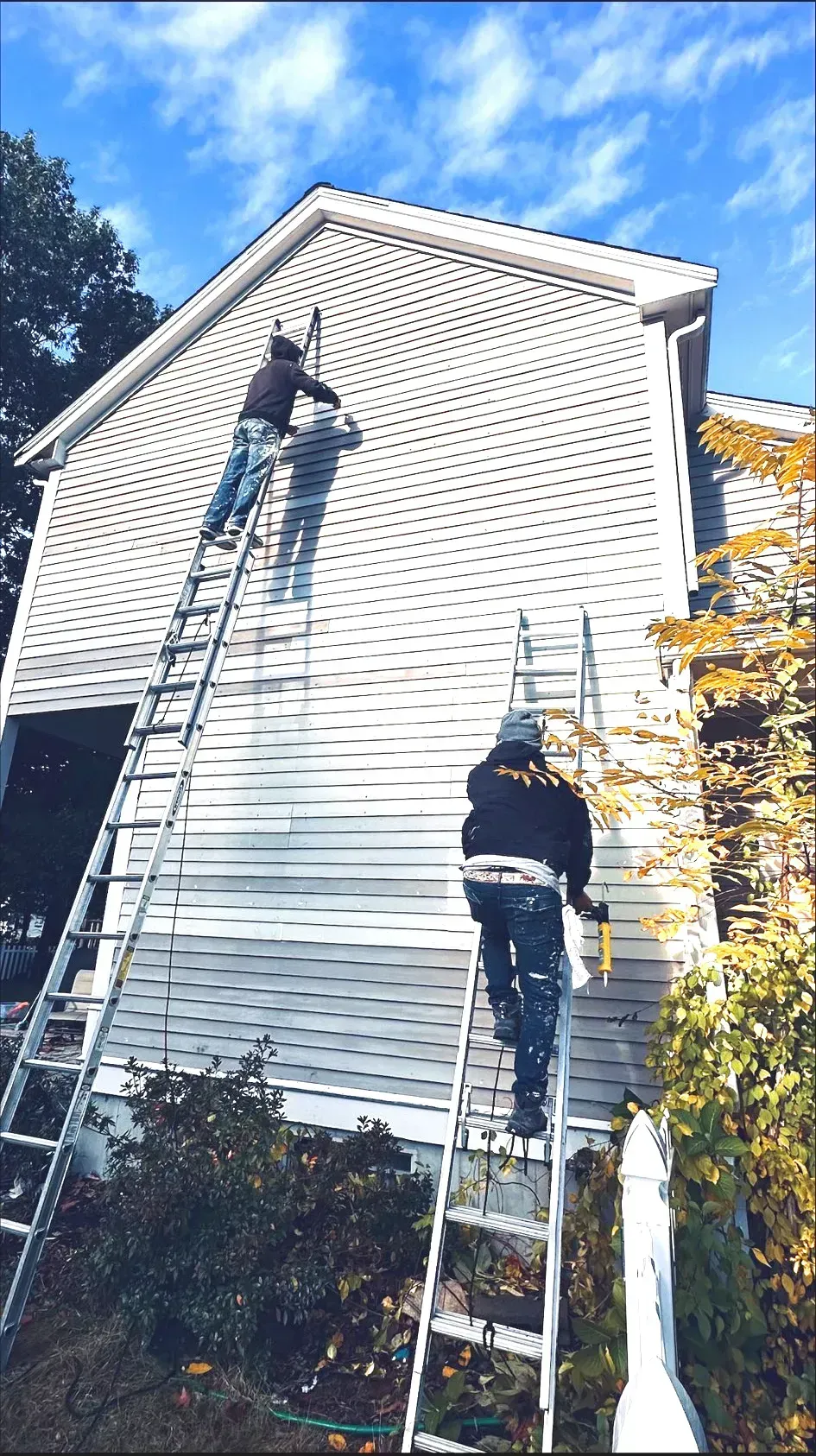
W&F Painting Solutions LLC is based in Waltham, and owner William Morales has been painting homes throughout Middlesex County since 2017. Every exterior project starts with a thorough walkthrough - we look for wood rot, failed caulk, and peeling before we quote, not after we start. Then we power wash, scrape, sand, re-caulk, spot prime, and apply two coats of a quality 100% acrylic exterior paint built for New England conditions. We don't consider the job done until we've walked the finished work with you.
★★★★★ Rated 5.0 - 41 Google Reviews from Waltham & Middlesex County Homeowners
Professional Exterior House Painting in Waltham, MA
Exterior painting involves much more than applying new paint to siding. In climates like Massachusetts, surfaces must be properly cleaned, scraped, repaired, and primed so the new coating adheres correctly.
Homes across neighborhoods in Waltham, Watertown, Belmont, Arlington, and Lexington often feature painted wood siding that has gone through many seasonal weather cycles. Over time paint can begin to peel, chalk, or fade.
Our team focuses heavily on preparation so that new coatings bond properly and maintain their appearance for years.
Exterior painting projects may involve siding, trim, doors, porches, and other exposed surfaces around the home.
Exterior painting projects often include several different components depending on the style of the house and the condition of the surfaces.
House Siding Painting
Siding is the largest painted surface on most homes and the area most exposed to sun and weather.
Homes throughout Waltham, Arlington, and Belmont often feature traditional wood clapboard or cedar siding that requires careful preparation before repainting.
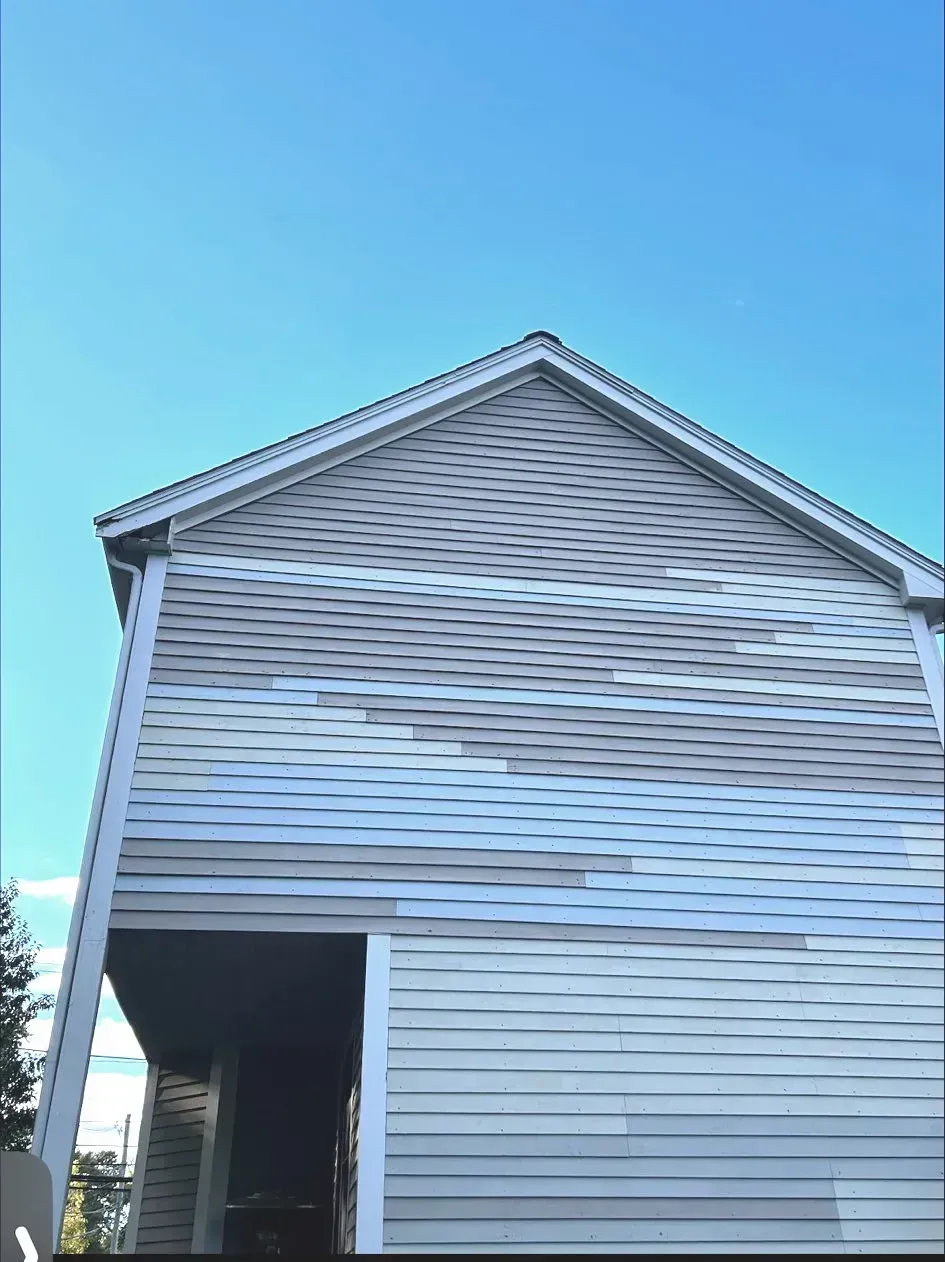
Before painting siding, loose paint is typically removed using scrapers, carbide blades, and sanding tools to create a stable surface for new paint.
Once surfaces are prepared and primed where needed, durable exterior paints are applied to protect the siding and improve the appearance of the home.
Trim, Fascia, Shutters, and Soffits Painting
Exterior trim plays an important role in both protecting the home and highlighting architectural details.
This includes surfaces such as window trim, fascia boards, shutters, soffits, and decorative woodwork often found on Colonial and Victorian homes throughout Belmont, Lexington, and Newton.
Trim areas are carefully sanded and primed before being finished with durable enamel coatings that resist moisture and help protect exposed wood surfaces.
Deck and Fence Staining
Outdoor wood structures such as decks and fences require specialized coatings designed to penetrate and protect the wood.
Deck and fence staining helps prevent moisture damage, sun fading, and surface cracking. Surfaces are cleaned and prepared before stain is applied so the product absorbs evenly into the wood.
Many homes in Weston, Lexington, and Arlington include outdoor living spaces where maintaining decks and fences is an important part of exterior upkeep.
Exterior Surface Preparation
Preparation is one of the most important steps in any exterior painting project. Surfaces must be stable and clean before paint is applied.
Exterior prep typically includes scraping loose paint, sanding rough edges, and spot priming exposed wood. These steps help ensure the new paint adheres correctly and lasts longer.
Proper preparation also helps create a smoother finish once the final coats are applied.
Power Washing
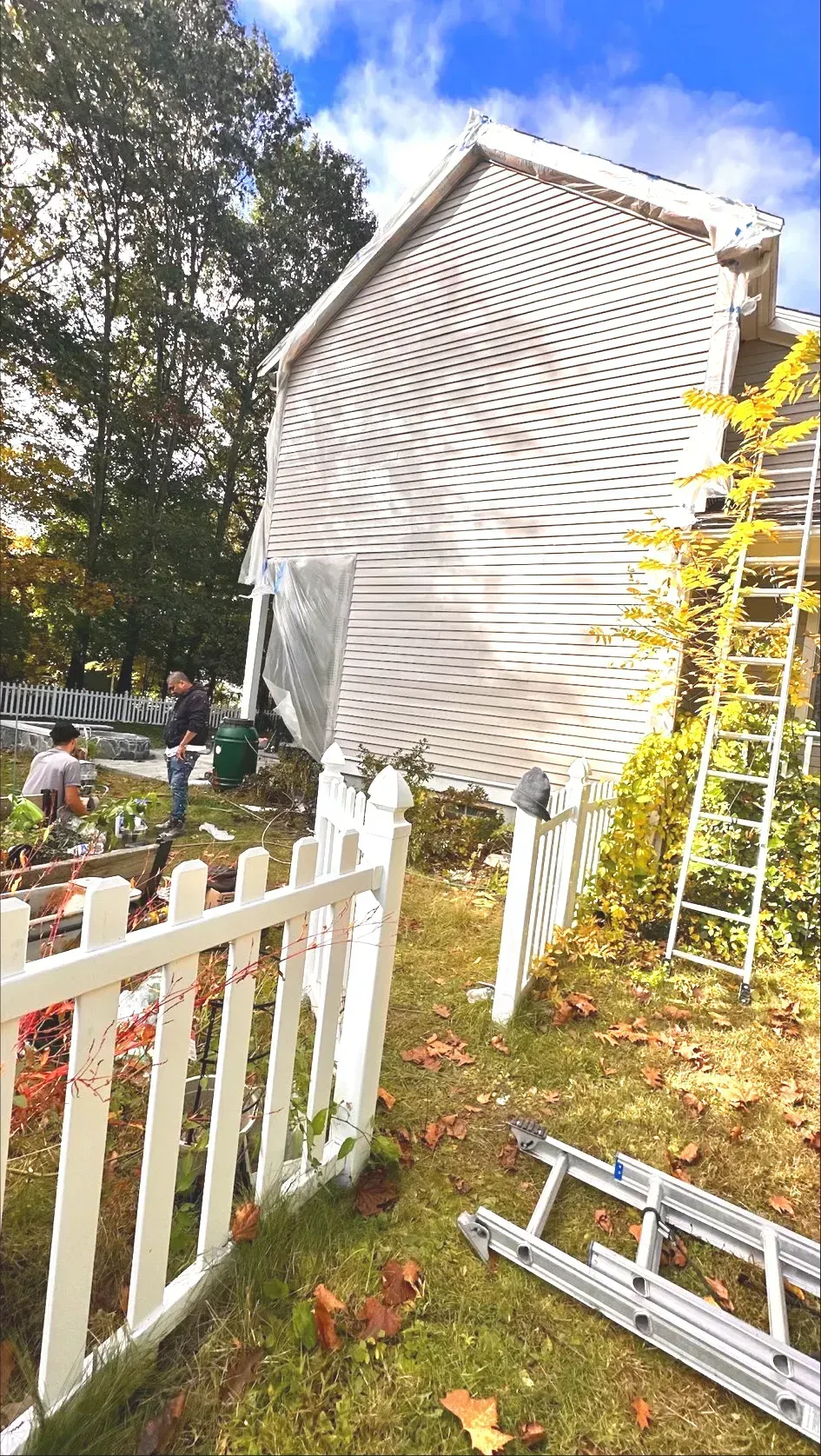
Before painting begins, homes are often cleaned using pressure washing or soft washing systems to remove dirt, mildew, and chalking paint residue.
Cleaning the surface helps remove contaminants that could interfere with paint adhesion and ensures the new coating bonds properly.
Power washing is an essential first step in exterior painting throughout Middlesex County, where homes experience seasonal pollen, moisture, and environmental buildup.
Front Door Painting
Front doors are one of the most visible features of a home and can make a major difference in curb appeal.
Painting or refinishing a front door helps refresh the entrance of the home while protecting the surface from sun exposure and weather.
Many homeowners throughout Waltham and Watertown choose bold accent colors for front doors to complement the exterior paint and create a welcoming entryway.
Garage Door Painting
Garage doors often receive direct sunlight throughout the day and can fade faster than other exterior surfaces.
Repainting garage doors helps restore color and protect the surface from weather exposure. Proper preparation ensures the paint bonds well to metal, wood, or composite materials commonly used in garage doors.
This service is common in suburban areas like Lexington, Weston, and Newton, where garages are a prominent part of the home’s exterior.
Brick and Stucco Painting
Some homes throughout Belmont, Newton, and Watertown include brick foundations or stucco sections as part of the exterior structure.
Painting brick or stucco requires coatings designed to bond properly to masonry surfaces while allowing the material to breathe. Proper surface preparation ensures the paint adheres evenly and maintains its appearance over time.
Exterior Carpentry and Wood Repair
Older homes across Waltham, Arlington, and Belmont sometimes have sections of trim or siding that need repair before painting can begin.
Minor carpentry work may include replacing small sections of damaged wood, repairing trim boards, or addressing areas affected by moisture.
Repairing these areas before painting helps create a more durable and professional final result.
Caulking and Weather Sealing
Exterior caulking helps seal gaps around windows, trim boards, and siding joints.
In New England climates where homes experience freeze-thaw cycles and temperature changes, properly sealed joints help prevent moisture intrusion and improve the durability of exterior paint.
New caulking is applied where needed before painting so the finished surfaces are protected from water and seasonal expansion.
Exterior Paint Products and Materials We Use
Exterior paint products must be able to handle weather exposure, UV rays, and seasonal temperature changes common across Massachusetts.
Our team frequently works with high-quality coatings from manufacturers such as:
• Benjamin Moore
• Sherwin-Williams
• PPG
Popular exterior products include:
• Benjamin Moore Aura Exterior
• Benjamin Moore Regal Select Exterior
• Sherwin-Williams Duration Exterior
• Sherwin-Williams Emerald Exterior
These paints are designed to resist fading, cracking, and moisture intrusion while providing strong coverage on wood and other exterior surfaces.
For application, professional painters often use tools such as Purdy or Wooster brushes and microfiber roller covers, which help distribute paint evenly and produce smoother finishes.
Painting Different Home Styles in Middlesex County
Homes across Waltham, Belmont, Watertown, Arlington, Newton, Lexington, and Weston represent a wide range of architectural styles, many of which were built decades ago using traditional New England materials. The age of these homes, along with Massachusetts’ seasonal weather patterns, plays a major role in how exterior paint performs over time.
Cold winters, humid summers, and repeated freeze–thaw cycles can cause wood siding, trim boards, and older paint layers to expand and contract throughout the year. Because of this, exterior painting in the Greater Boston area requires careful preparation and the right coatings for each type of home.
Understanding the style and age of the property helps determine the best preparation methods and paint finishes.
Colonial Homes
Colonial homes are one of the most common housing styles throughout Waltham, Arlington, and Lexington. Many of these houses feature traditional wood clapboard siding, wide trim boards, and double-hung windows.
Because these homes often have multiple layers of older paint, proper preparation is critical before repainting. Loose paint must be scraped away, edges sanded smooth, and exposed wood primed to ensure the new paint bonds properly.
Colonial homes are frequently exposed to full sun on at least one side of the house, especially in suburban neighborhoods. South-facing walls may experience more paint fading and chalking due to UV exposure during summer months, making durable exterior coatings particularly important.
Victorian and Historic Homes
Towns like Belmont, Newton, and parts of Lexington include many historic homes built in the late 1800s and early 1900s. Victorian homes often feature decorative trim, detailed woodwork, and layered architectural elements.
Painting these homes requires careful brushwork and patience because trim details, brackets, and moldings need precise preparation and finishing.
Older Victorian homes may also contain original wood siding or cedar shingles, which expand and contract during seasonal temperature changes. Winters in Massachusetts regularly bring freezing temperatures, followed by warmer spring days, which can cause older paint layers to crack or separate from the wood.
Proper sanding, priming, and sealing are essential before applying new paint to these surfaces.
Multi-Family and Triple-Decker Homes
Neighborhoods throughout Watertown and East Waltham contain many multi-family homes and triple-decker properties that were built in the early 1900s.
These homes often have painted wood siding and exposed staircases, railings, and porch structures that receive heavy use and weather exposure.
Because these properties may experience more wear and frequent repainting between owners or tenants, durable exterior coatings are commonly used. Preparation often includes repairing worn trim boards, scraping loose paint, and sealing joints around windows and siding seams.
Many of these homes are located in neighborhoods with mature trees, where shade and moisture can lead to mildew buildup on exterior surfaces if not properly cleaned before painting.
Ranch and Mid-Century Homes
Mid-century ranch homes are common in parts of Newton and Weston, where larger lots and open suburban layouts became popular in the 1950s and 1960s.
These homes often feature wide exterior walls with fewer trim details but larger siding surfaces exposed to sun and weather.
Because ranch homes typically have long horizontal siding runs, even minor paint failures can become more visible. Proper surface cleaning, sanding, and consistent paint application help ensure a uniform finish across large wall areas.
Homes in these areas may also experience greater sun exposure due to open yards, which can accelerate paint fading if lower-quality products are used.
Modern and Renovated Homes
Newer homes and renovated properties in Weston and Lexington often incorporate modern siding materials along with traditional wood trim elements.
These homes may include composite siding products, fiber cement boards, or other materials that require compatible exterior coatings. Surface preparation still plays a major role in ensuring the paint bonds properly to these materials.
Because many of these homes are located in more open areas, wind-driven rain and seasonal storms can affect exterior surfaces, making durable paints and proper sealing important for long-term protection.
Wood Rot, Soft Trim, and What We Find Before We Paint
A lot of exterior paint failures in Waltham aren't paint failures at all. They're wood failures that got painted over. When a painter skips the probe and applies fresh paint to soft or spongy wood, the moisture trapped underneath keeps working — the rot spreads, the new paint lifts, and within a season you're looking at the same problem in a worse condition.
We look for wood rot on every estimate walkthrough. We use a screwdriver or awl to probe trim boards, window sills, fascia, corner boards, and any area where two pieces of wood meet — because that's where water gets in. If the tool goes through without resistance, the wood needs to come out before anything else happens.
When we find rot, we tell you immediately and explain the scope before proceeding. Minor soft spots are treated with epoxy consolidant and filled with a two-part epoxy filler that bonds to the surrounding wood and holds paint like new stock. Sections that have deteriorated beyond repair are cut out and replaced with new wood or cellular PVC trim before priming and painting.
Older homes throughout Waltham, Belmont, Arlington, and Newton are particularly susceptible — especially around north-facing walls, rooflines, areas beneath gutters, and window surrounds that haven't been caulked in years. We see it regularly and know how to handle it as part of the painting project rather than sending you to find a separate contractor.
Our Exterior Painting Process
A structured process helps ensure consistent results.
Property Walkthrough
We inspect the exterior surfaces and discuss color selections and repair needs.
Surface Cleaning
Homes are pressure washed to remove dirt, mildew, and chalking paint.
Preparation and Repairs
Loose paint is scraped, surfaces are sanded, and repairs are completed where needed.
Priming
Exposed wood or repaired areas are primed to ensure strong paint adhesion.
Paint Application
Exterior coatings are applied using professional tools and techniques designed for even coverage.
Final Inspection
We walk the finished exterior with you before final payment. If anything isn't right, we fix it first.
When to Schedule Exterior Painting in Waltham, MA
Massachusetts gives you a narrower window for exterior painting than most homeowners realize. Paint needs temperatures consistently above 50°F to cure properly — below that threshold, acrylic paint can't form a proper film, which leads to poor adhesion, uneven sheen, and early failure. In practice that means the reliable exterior painting season in Waltham runs from mid-May through mid-October, with the sweet spots being late spring and early fall.
Spring (May–June) is popular for good reason — homeowners want to address whatever winter exposed, and the weather is generally cooperative. The main variable is rain. We monitor forecasts closely and won't apply finish coats if rain is expected within 24 hours or if the surface is still holding moisture from recent wet weather.
Summer (July–August) works well but requires attention to heat. Painting in direct afternoon sun above 85°F causes paint to dry too fast, which traps solvent and can cause blistering. We schedule summer work for morning starts and work around the sun where possible on exposed elevations.
Early fall (September–October) is often the best window of the year. Temperatures are stable, humidity drops, and the days are long enough to complete full coats before evening. If you're planning a project for next season, fall scheduling typically has more availability than peak spring demand.
What we don't do is rush work to fit a calendar. If conditions aren't right — an unexpected cold snap, a wet week, overnight temperatures forecast to drop below 45°F — we hold off and communicate that clearly rather than painting anyway and hoping it holds.
If you're planning an exterior project and want to know the best timing for your specific home and situation, call William at (781) 392-8341. We'll give you an honest read on scheduling when we come out for the estimate.
Trusted by Homeowners for Exterior Painting Across Middlesex County
Read reviews from homeowners throughout Waltham and nearby towns who trusted W&F Painting Solutions LLC to protect and refresh their home’s exterior.
Common Exterior Paint Problems in New England Homes
Homes throughout Waltham, Belmont, Watertown, Arlington, Newton, Lexington, and Weston experience a unique set of exterior paint challenges because of the New England climate and the age of many houses in the area.
Cold winters, humid summers, and repeated freeze–thaw cycles put constant stress on exterior paint and the wood surfaces underneath it. Many neighborhoods across Middlesex County also have mature trees, shaded lots, and older construction materials that affect how exterior paint ages over time.
Recognizing these issues early — and preparing surfaces correctly — helps ensure new paint lasts longer and protects the home properly.
Peeling Paint from Freeze–Thaw Cycles
Massachusetts winters regularly bring freezing temperatures followed by warmer periods in late winter and early spring. These temperature swings cause wood siding and trim to expand and contract repeatedly.
Older homes throughout Waltham, Belmont, and Arlington often have multiple layers of paint built up over decades. When moisture works its way behind these layers and temperatures drop, the trapped water can expand as it freezes, pushing paint away from the wood surface.
This is one of the most common causes of peeling paint in New England homes. Proper preparation usually involves scraping loose paint, sanding rough edges, and applying bonding primers before repainting.
Mildew Growth in Shaded Areas
Many neighborhoods across Newton, Lexington, and Weston have tree-lined streets and mature oak and maple trees that create shaded areas around homes.
While these trees add beauty and shade, they also create damp conditions where moisture can linger on siding after rain or morning dew. In shaded areas that do not receive much direct sunlight, this moisture can lead to mildew growth on exterior paint.
Before repainting these surfaces, painters typically clean the siding using specialized cleaners and washing systems designed to remove mildew and organic buildup.
Sun Fading on South-Facing Walls
Homes located on open lots in towns like Lexington, Weston, and parts of Arlington often have one side of the house that receives intense sunlight throughout the day.
South- and west-facing walls tend to experience the most UV exposure during the summer months. Over time, sunlight can break down paint pigments, causing colors to fade or develop a chalky residue.
Using high-quality exterior paints designed for UV resistance helps reduce fading and maintain the color longer.
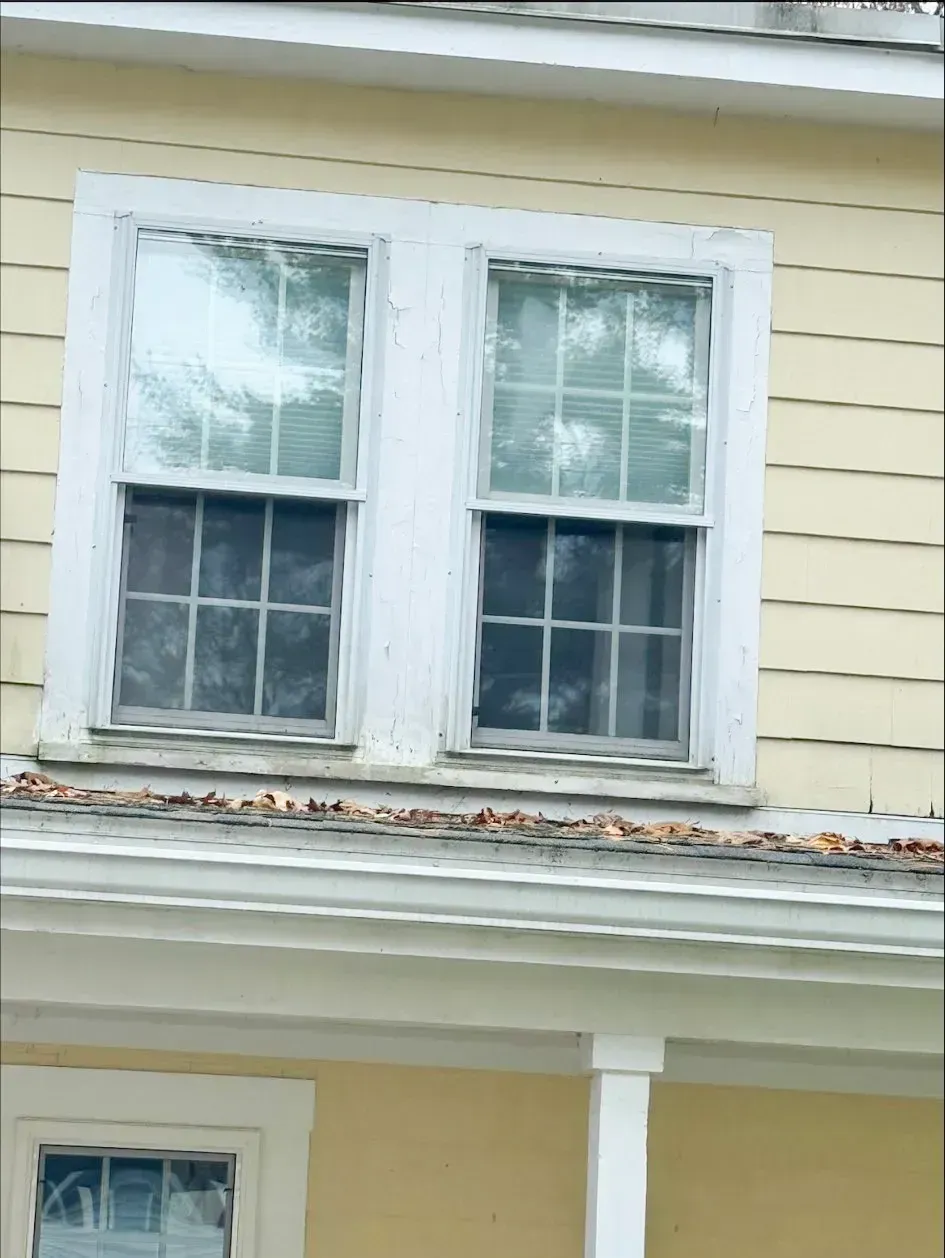
Cracked or Failing Caulking Around Windows and Trim
Exterior caulking plays a major role in protecting homes from water intrusion. Over time, however, caulking can dry out and crack due to temperature fluctuations.
Homes across Watertown, Belmont, and Waltham often experience this issue after years of seasonal expansion and contraction. When caulking around windows or trim fails, water can enter small gaps and begin to damage the wood underneath the paint.
During exterior painting projects, these areas are typically re-caulked to seal joints before new paint is applied.
Moisture Damage Near Rooflines and Gutters
Another common issue occurs around rooflines, fascia boards, and areas near gutters where water runoff is concentrated.
In older homes throughout Arlington and Newton, paint may begin to bubble or peel in these areas if gutters overflow or if water repeatedly runs down the siding.
Addressing these moisture-prone areas during preparation helps prevent future paint failure.
Tree Debris and Environmental Buildup
Homes surrounded by trees — common throughout Lexington, Weston, and Belmont — often collect pollen, sap residue, and organic debris on siding and trim.
Over time this buildup can create a dull or chalky appearance on painted surfaces and may even interfere with new paint adhesion if not properly removed.
Pressure washing or soft washing is typically used to clean exterior surfaces before repainting begins.
Tree Debris and Environmental Aging Paint Layers on Historic Homes
Many homes across Belmont, Waltham, and Watertown were built decades ago and have been painted many times over the years.
Older paint layers can become brittle and begin separating from the wood siding underneath. When repainting these homes, painters often remove loose paint and feather the edges before applying primers and new coatings.
Proper preparation ensures the new paint bonds to a stable surface rather than sitting on top of failing paint layers.
Why Local Conditions Matter
Exterior painting in Middlesex County and the Greater Boston area requires understanding how local weather and housing styles affect paint performance.
Between:
• freezing winter temperatures
• humid summers
• shaded tree-lined neighborhoods
• older wood siding and trim
homes in this region require careful preparation and durable coatings designed to withstand New England conditions.
Taking the time to address these issues before painting helps ensure the finished paint job protects the home and maintains its appearance for years.
Why Homeowners Choose W&F Painting Solutions LLC
Homeowners across Middlesex County trust W&F Painting Solutions LLC because of our focus on preparation, durability, and attention to detail.
Owner William Morales, a Waltham resident, has built the company around dependable service and quality workmanship since 2017.
Our team works with homeowners throughout Waltham, Belmont, Watertown, Arlington, Newton, Lexington, and Weston, helping maintain and improve homes throughout the region.
Exterior Painting FAQs
How much does exterior house painting cost in Waltham, MA?
Most full-house exterior projects in Waltham run between $3,500 and $9,000 depending on home size, number of stories, siding condition, and whether wood rot repair or carpentry work is needed. Homes with significant peeling, failed caulk, or rotted trim cost more because the prep takes longer — and that prep is what determines how long the job lasts. We provide detailed written estimates at no charge, broken down by scope so you know exactly what you're paying for before anything starts.
What is the best time of year to paint the exterior of a house in Massachusetts?
Late spring through early fall — roughly May through October — is the practical window for exterior painting in Waltham. Paint needs temperatures consistently above 50°F to cure properly, and we don't paint when rain is expected within 24 hours or when overnight temperatures are forecast to drop sharply. Early fall is often ideal: cooler temperatures, lower humidity, and more predictable weather than summer. We build flexibility into every schedule and won't rush a job in marginal conditions.
What if there's wood rot on my trim or siding — do you handle that before painting?
Yes, and we look for it specifically during our estimate walkthrough. Painting over wood rot traps moisture, accelerates decay, and causes new paint to fail within a season. We probe soft areas, replace damaged sections of trim or siding where needed, and prime all bare wood before any finish coat goes on. If we find rot during the project that wasn't visible at the estimate, we communicate it immediately before proceeding.
How do you prepare the exterior before painting?
Power washing is the first step, but it's a long way from the last. After washing we let surfaces dry completely, then scrape and sand all peeling and loose paint, probe and repair any soft wood, re-nail loose siding or trim, caulk all gaps around windows, doors, and trim joints, and spot prime bare wood and repaired areas. On most Waltham homes the prep phase takes longer than the painting itself — and that's intentional.
How long does exterior paint last in New England?
On a well-prepped surface using a quality 100% acrylic paint like Benjamin Moore Aura or Sherwin-Williams Duration, you can expect 7–10 years in the Waltham area. Wood trim typically needs attention sooner — every 4–6 years — because it expands and contracts more than siding. The single biggest factor in lifespan isn't the paint brand, it's how thoroughly the surface was prepared before the first coat went on.
My paint keeps peeling in the same spot every year. What's causing it?
Recurring peeling in the same location almost always means there's a moisture problem behind the surface, not a paint problem. Common causes in Waltham homes include failed caulk around windows, gutters that overflow onto siding, or ice dam damage at the roofline. Repainting without fixing the source will fail again in the same spot. We inspect recurring problem areas during estimates and will tell you honestly if something needs to be resolved before we paint.
Do you handle all the prep work, or do I need to do anything beforehand?
We handle everything — power washing, scraping, sanding, caulking, wood repairs, and priming. You don't need to do anything ahead of time other than let us know about any areas you've noticed peeling, soft wood, or recurring moisture issues. That helps us focus the estimate walkthrough on the right spots.
What kind of paint do you use for exteriors?
We primarily use Benjamin Moore Aura Exterior and Sherwin-Williams Duration or Emerald — both 100% acrylic formulas with strong UV resistance and flexibility for New England temperature swings. We don't use contractor-grade budget paints on exterior projects. The difference in how long a quality paint holds through Massachusetts winters is significant.
Can you paint my deck or fence at the same time as the house?
Yes — we often combine deck staining or fence painting with an exterior house project since the crew and equipment are already on site. Deck staining requires its own prep and a different product than house paint, so we scope it separately during the estimate. Combining projects is usually more efficient and can reduce overall cost.
How long does an exterior painting project take?
A typical single-family home in Waltham takes three to five days for the painting itself, but the full timeline from estimate to completion is usually two to four weeks depending on schedule and weather. We don't paint in rain or when overnight temperatures are forecast to drop, so we build flexibility into every project. You'll get a realistic timeline at the estimate and we'll communicate any weather adjustments as they come up.
Exterior Painting Across Middlesex County
W&F Painting Solutions LLC provides exterior house painting for homeowners throughout the greater Middlesex County area. Many of our projects take place in neighborhoods across Waltham, Belmont, Watertown, Arlington, Newton, Lexington, and Weston, where homes range from historic colonials and Victorians to newer construction and multi-family properties. If you’re looking for a local painter in your area, you can learn more about our services in your town by visiting our pages for Waltham exterior painters, Belmont painting services, Watertown house painters, Arlington painting contractors, Newton exterior painting, Lexington home painters, and Weston residential painters.
Planning an Exterior Painting Project?
If your home’s exterior paint is fading, peeling, or simply ready for a refresh, W&F Painting Solutions LLC can help.
Our team provides professional exterior painting with careful preparation and durable coatings designed for New England homes.
Many homeowners who schedule exterior painting also plan interior updates at the same time. Learn more about our interior house painting services.
North & Northwest
East & Cambridge Area
About W&F Painting Solutions LLC
W&F Painting Solutions LLC is a locally owned painting company based in Waltham, MA. We work with homeowners and businesses throughout Waltham, Watertown, Newton, and surrounding Middlesex County communities.
Our team focuses on proper prep, organized job sites, and clean, consistent finishes that hold up over time. We’re fully insured in Massachusetts and known for clear communication and reliable scheduling from start to finish.
If you're looking for a professional painter who respects your home and your time, we’re ready to help.
Trusted Painting Professionals Across Middlesex County



Our Office
W&F Painting Solutions LLC
254 River St
Waltham, MA 02453
Phone: (781) 392-8341
Hours:
Monday – Sunday: 7:00 AM – 9:00 PM
Licensed & Insured in Massachusetts
Serving Waltham, Watertown, Weston, Newton, Belmont, Arlington & Lexington


Copyright © 2026 W&F Painting Solutions LLC. All rights reserved.