
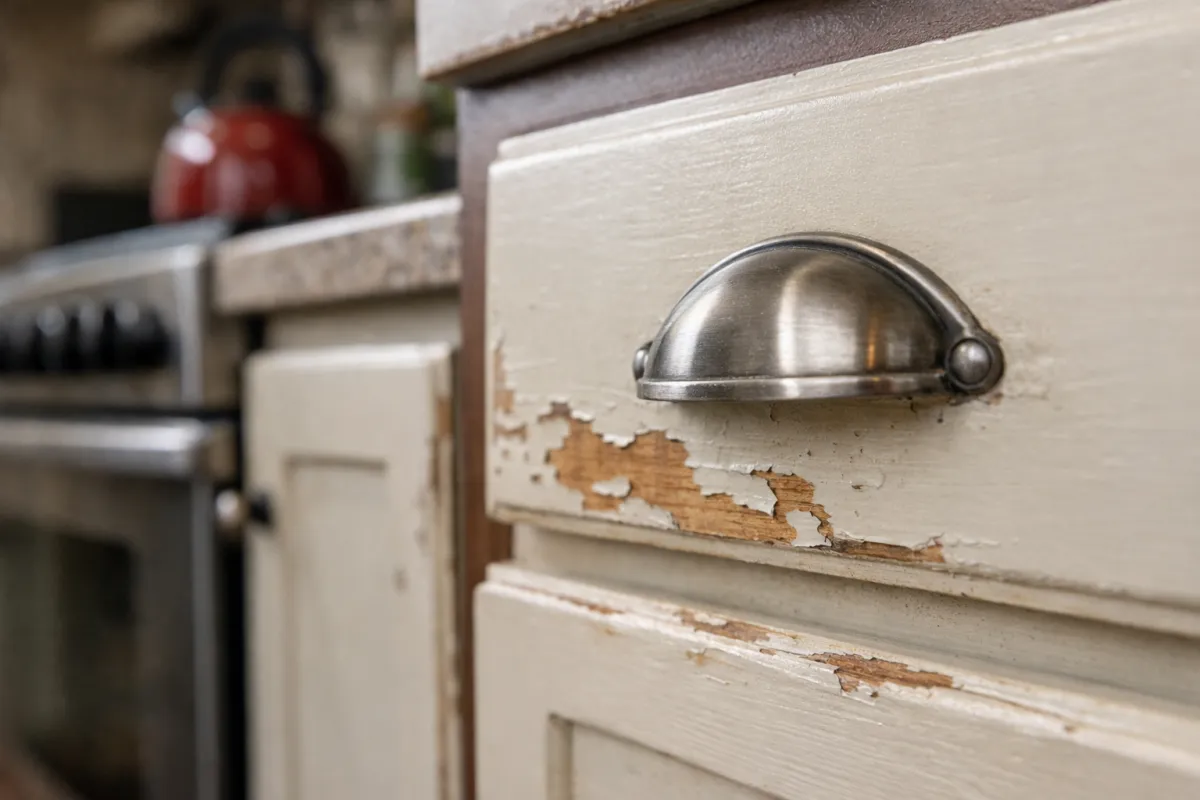
Why Painted Cabinets Fail in Older Massachusetts Homes
Cabinet painting failures don’t usually show up right away. Most Waltham homeowners and Watertown homeowners reach out to us a year or two after their cabinets were painted, when the finish starts chipping near handles or peeling close to the stove.
At that point, it’s easy to assume the paint itself was the problem. In reality, cabinet failures in older Massachusetts homes almost always come down to how the home was built and how the work was prepared, not the color or brand of paint.
Older Homes Create Different Challenges for Cabinet Painting
Many kitchens in Waltham and Watertown weren’t built with repainting in mind. Cabinets installed decades ago often have factory finishes designed to resist coatings, not accept them. Add years of cooking grease, limited ventilation, and fluctuating indoor humidity, and the surface is already working against you before painting even begins.
That doesn’t mean cabinet painting won’t last in older homes. It just means the process has to be adjusted for the house — not rushed or treated like a newer build.
Where Cabinet Paint Jobs Usually Break Down First
When we inspect cabinets that are failing prematurely, the same problem areas show up again and again. Paint tends to wear through first along door edges and around knobs where hands make constant contact. Near stoves and dishwashers, finishes often discolor or peel because of heat and moisture exposure.
These failures aren’t random. They’re stress points — and older homes amplify those stresses because layouts, airflow, and insulation weren’t designed for modern coatings.
Why Seasonal Humidity Matters More Than Most People Realize
Massachusetts homes go through dramatic seasonal changes. Winter heating dries the air out. Summer humidity pushes moisture back into the space and into the wood itself. Cabinets expand and contract slightly throughout the year.
If paint is applied without accounting for that movement — or if surfaces aren’t properly prepared — the finish becomes brittle. After one or two full seasonal cycles, that brittleness turns into chipping, cracking, or peeling.
This is why rushed cabinet jobs often look fine at first and then struggle once the home goes through a full year of real use.
Prep Is the Difference Between a Short-Term Fix and a Long-Lasting Finish
In older kitchens, preparation isn’t optional — it is the job.
That means removing doors, cleaning years of residue, addressing existing finishes correctly, and allowing primers and topcoats to cure fully before reinstallation. Skipping any of these steps might save time up front, but it almost always leads to earlier failure.
We see the same cabinet issues in nearby towns like Newton and Arlington, where older housing stock creates similar conditions. This is also why understanding real cabinet painting costs matters — most of that cost is tied directly to prep and time, not materials alone.
Why Application Method Matters in Older Kitchens
Older kitchens are tight, lived-in spaces. They weren’t designed to function as spray booths. That’s why many durable cabinet paint jobs involve spraying doors in controlled environments instead of trying to do everything inside the kitchen.
Smooth finishes aren’t just about appearance. They reduce friction, shed grime more easily, and stand up better to regular cleaning — which makes a noticeable difference in kitchens that get daily use.
When Cabinet Painting Still Makes Sense
Even in older homes, cabinet painting in Waltham, MA can be a smart upgrade when the cabinet boxes are structurally sound and the layout still works for how the home is used today. The key is matching expectations to reality and using a process built for the home — not a generic checklist.
In many cases, pairing cabinet updates with interior painting services helps refresh the entire space without the cost, disruption, or timeline of full cabinet replacement.
At W&F Painting Solutions LLC, we’ve worked in enough older kitchens to know what holds up over time — and what doesn’t.
Cabinet Painting FAQs for Waltham & Watertown Homeowners
How long does cabinet painting last in older Massachusetts homes?
When cabinet painting is done with proper preparation, quality primers, and durable finishes, it can last 10 to 15 years even in older Waltham and Watertown homes. Jobs that skip prep or rush curing often show wear within just a few years.
Do cabinet doors need to be removed for painting?
In most cases, yes. Removing cabinet doors allows for thorough cleaning, proper surface prep, and smoother sprayed finishes. In many local homes, doors are painted off-site or in controlled environments because kitchens aren’t designed to handle spraying cleanly.
Is cabinet painting a good option if I’m not planning a remodel?
For homeowners who like their kitchen layout but want it to feel cleaner and more updated, cabinet painting is often the most practical option. As long as the cabinets are structurally sound, painting can extend their life without the cost or disruption of replacement.






Mail
Facebook
LinkedIn
X
Pinterest
Reddit